
Walk cycle animation : what the passing position reveals about your character
Contact, down, passing, up: everyone knows the four poses of a step. Yet two characters following the same recipe will walk exactly the same way, and that is the problem. In his masterclass Anatomy of a Walk, Samy Fecih, a 3D animator working on feature films, shows how weight, posture and anatomy turn a walk cycle into a real walk.
 By Bouncing Ball
- 8 min read
- Level: Beginner to advanced
In this article
- The 4 poses of a walk cycle: contact, down, passing, up
- Why the passing position reveals a character’s weight
- Posture drives the walk
- Pelvis, knees, feet: what anatomy changes
- Should you follow Richard Williams to the letter?
- Animating a walk cycle in 3D: IK, FK and progression
- Building your own reference library
- The checklist before animating a walk
- Frequently asked questions
The 4 poses of a walk cycle: contact, down, passing, up
A step breaks down into four poses. Samy goes over them right at the start (00:36), ranking them the way we do in production:
- Contact: the key pose. The front foot touches the ground, the step is taken.
- Down: an extreme. The body absorbs its weight, the pelvis is at its lowest point.
- Passing: the breakdown. The free leg passes under the body.
- Up: the other extreme. The supporting leg rises onto the toes, the pelvis is at its highest.
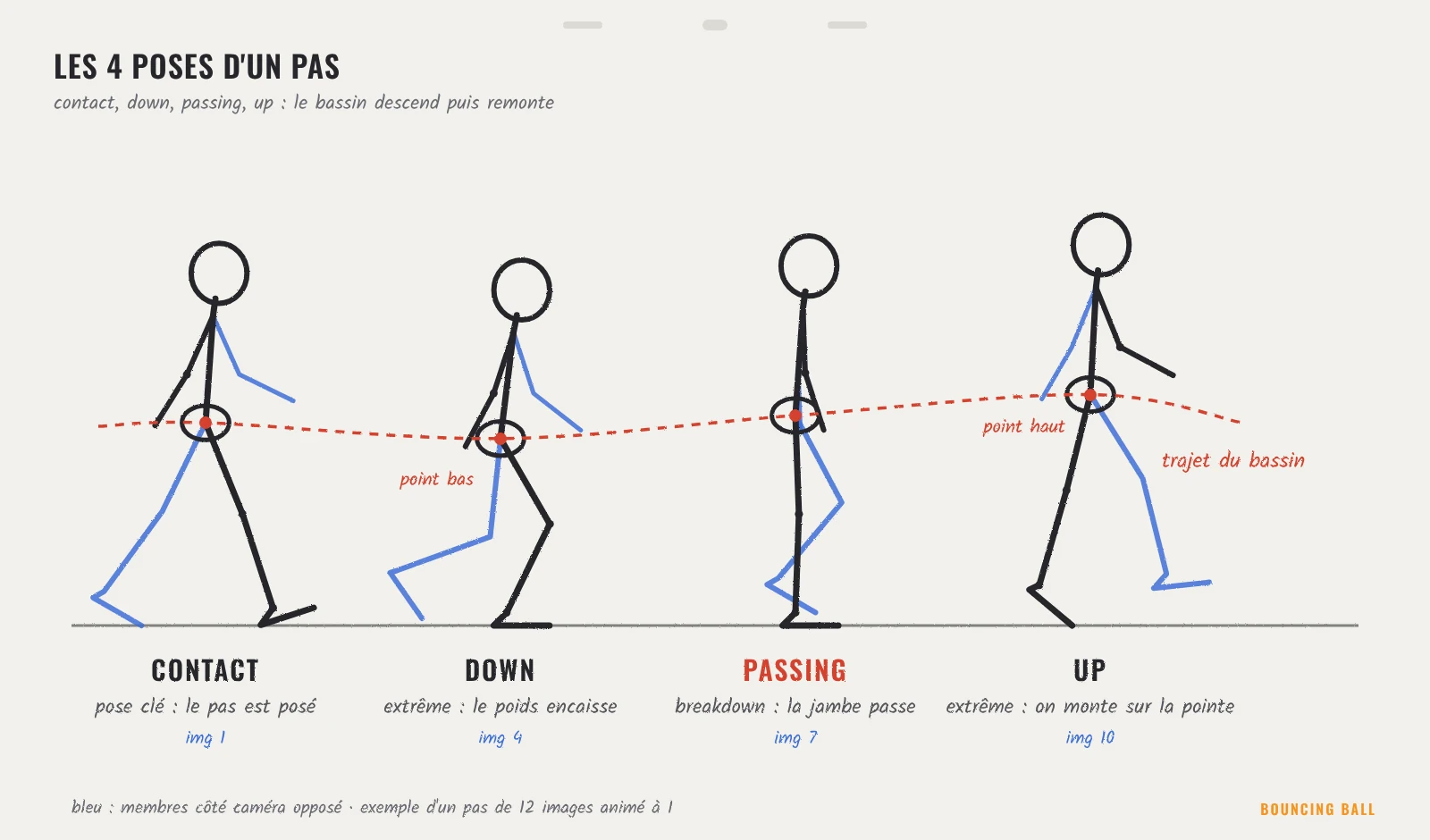
Why a down? Because there is an up. The body comes back down through inertia after rising. The proof: if your character starts from a contact pose at a standstill, there is no down on the first step (41:53). And the up exists because the supporting leg has to rise onto the toes to let the other leg pass (42:52).
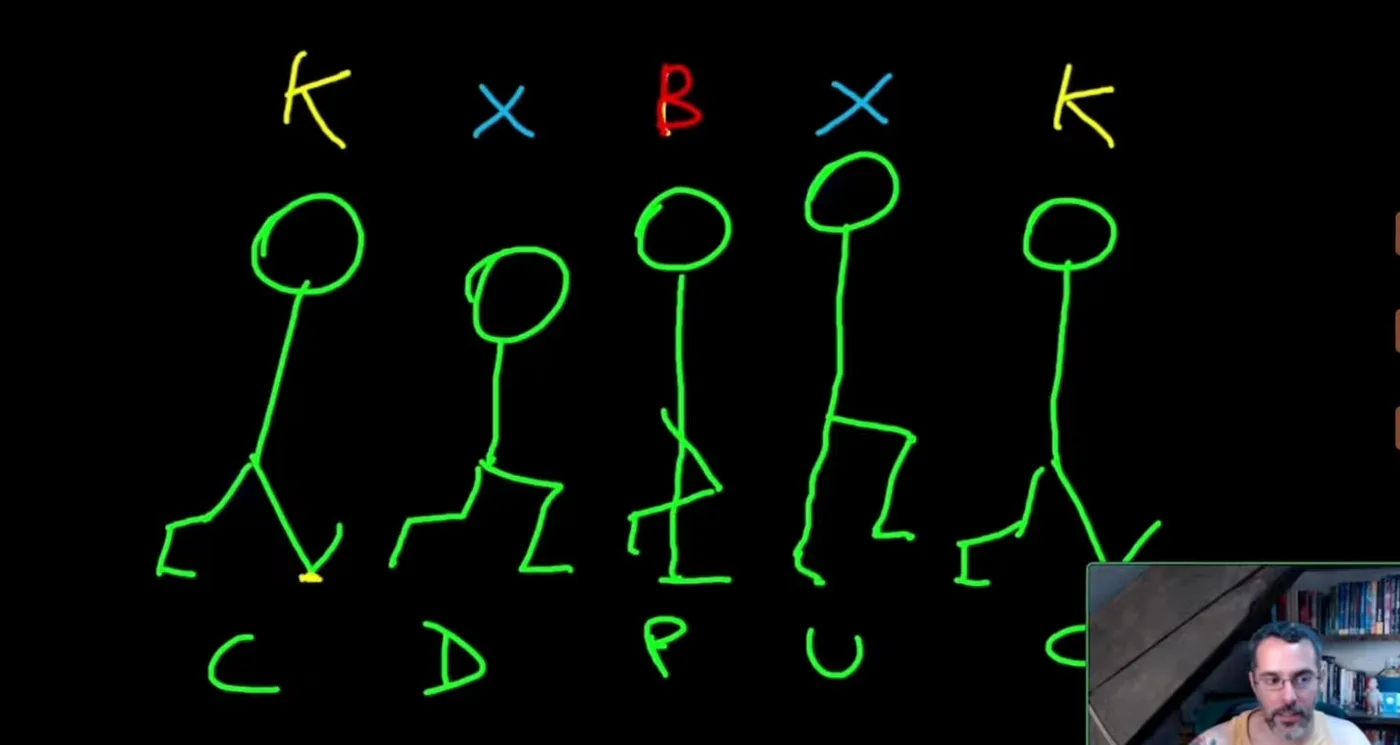
This hierarchy matters. In blocking, you set the contacts first, then the passings, then the extremes. A junior who gives all four the same importance misses the point: the pose that gives a walk its personality is the passing.
Why the passing position reveals a character’s weight
This is the core idea of the masterclass (04:57): the breakdown of a walk gives everything away about the character. Compare two passings.
- A light character is already on the toes of the supporting foot when the other leg passes.
- A heavy character still has the supporting leg bent. It takes longer to « recover » from the step.
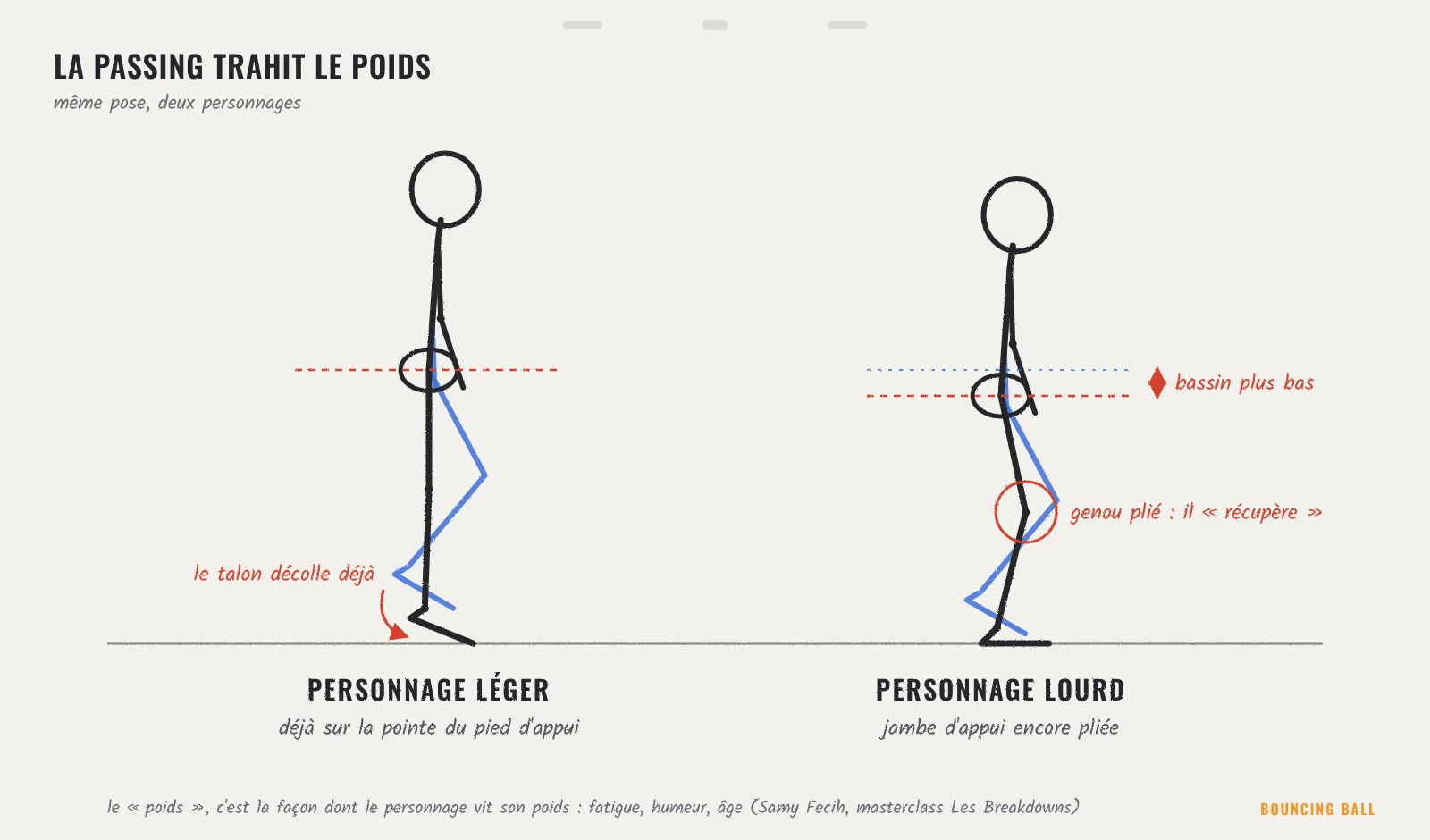
Careful, the weight we are talking about is not the actual mass. In his masterclass on breakdowns, Samy makes it clear: it is the way the character experiences its weight (14:08). A tired teenager or a sick person carries their weight as a burden: they will have a bent leg on the passing, even if they are slim.
« Passing positions are going to be different for everyone. »
Samy Fecih, Breakdowns masterclass 11:45
Another point that is often misunderstood: the height of the center of gravity changes the walk very little. Weight is what drives the amplitude of the vertical movement (03:18). And to walk, a slight forward imbalance is enough. Big imbalances are for running.
Posture drives the walk
« The way we walk is extremely influenced by our posture, » Samy sums up (17:00). What matters most is not « the pelvis » in general, it is the flexibility of the joints: shoulders, hips, knees, ankles.
Arms swing along the axis of the shoulder
The arm does not necessarily swing back and forth in a straight line. It follows the orientation of the shoulder (05:58):
- Balanced chest and back: the arms swing straight.
- Very developed pecs or a hunched back: the shoulders roll forward, the arms swing inward.
- Arched body, open chest, for example in heels: the shoulders open and the arms swing outward.
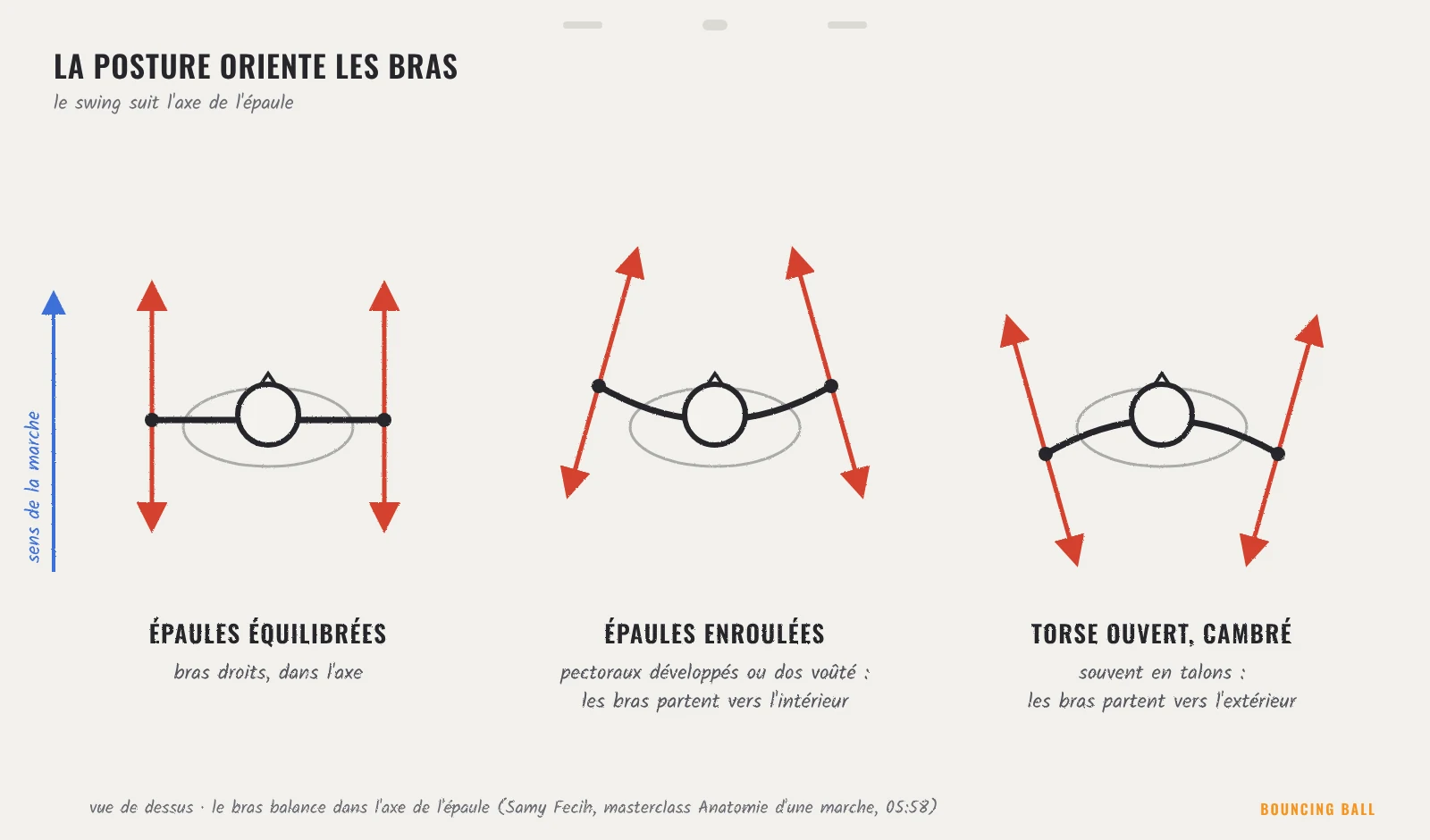
Samy shows it on his own body: his two arms do not swing the same way, because of years of sport. A direct lesson for your characters: do not make them symmetrical (08:37).
When the arms do not move, the shoulders compensate
We swing our arms for balance: right arm against left leg, and vice versa. If the character has hands in pockets, or only one free arm, the shoulders and torso rotate to compensate (23:58). Conversely, free and wide arm swings make the shoulders rotate very little.
Same detail for the elbows. Many people walk mostly by bending their elbows, with little swing. Bending the arms uses the biceps: it is an effortful, determined walk. Letting the arms swing uses momentum: a relaxed, nonchalant walk (55:06).
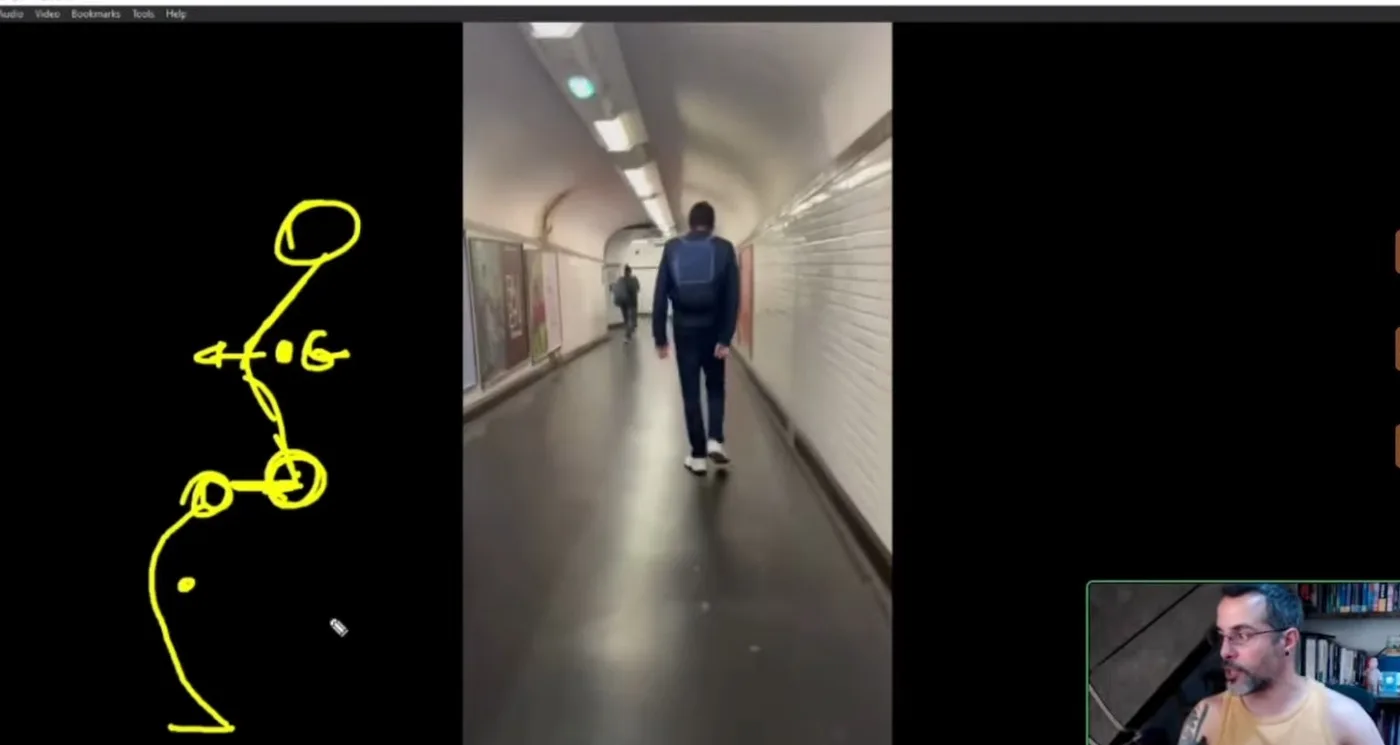
Pelvis, knees, feet: what anatomy changes
Not all joints react the same way to posture. The knee and the elbow have only one axis (flexion, extension): they are barely affected. The shoulders and hips, on the other hand, change everything (12:24).
Feet and knees
Samy distinguishes two types of support (36:22):
- Supination: weight on the outside of the foot, the knees go outward. That is the « cowboy » walk.
- Pronation: the foot collapses inward, the knees go inward.
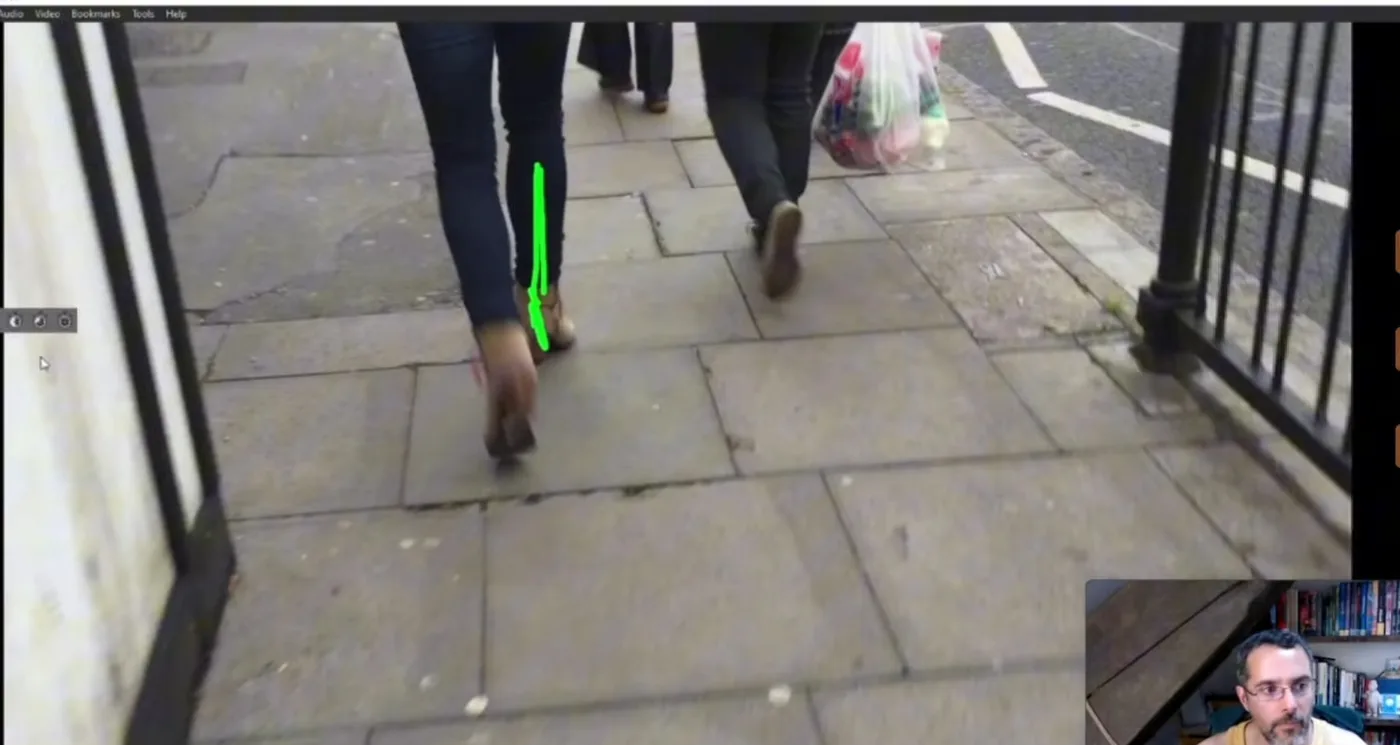
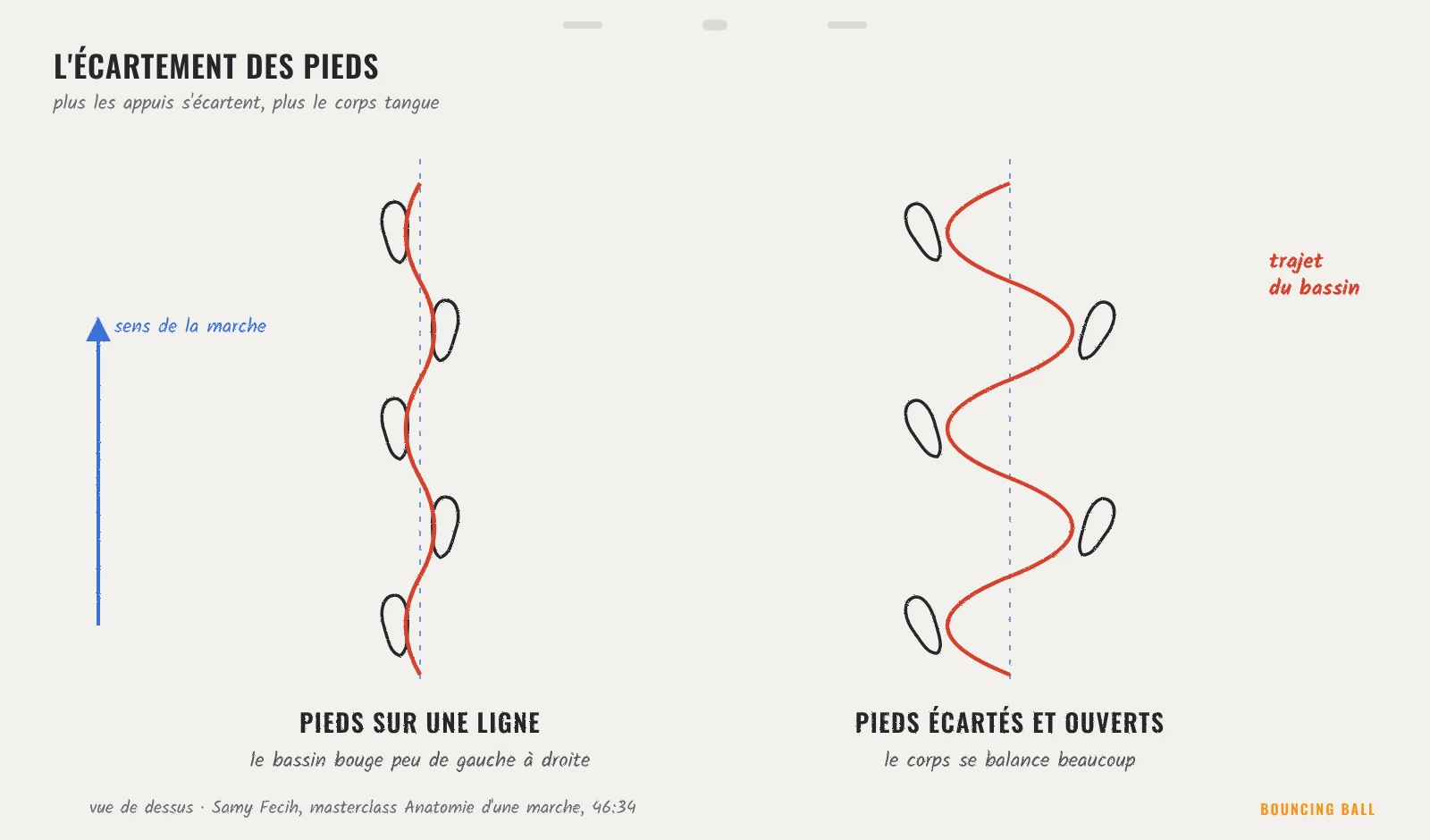
Foot spacing sets the sway
The wider apart and more open the feet, the more the body sways from side to side. A character who walks « on a line » barely moves sideways (46:34).
The pelvis and stride length
Hamstring flexibility determines the ability to lean and the size of the strides (39:41). A character with stiff legs takes shorter steps and compensates with the lower back. A character’s athletic past shows all the way down to their stride.
Should you follow Richard Williams to the letter?
The Animator’s Survival Kit by Richard Williams remains the reference for learning the walk cycle. Samy does not reject it, but he criticizes the way many schools apply it: as the one and only truth (26:41).
« Every walk is different. You have to understand what you are animating. »
Samy Fecih, Anatomy of a Walk masterclass 26:46
A concrete example: according to Samy, the book was written at a time when you could not analyze a video frame by frame, hence a few approximations. From the side, the path of the foot is not a nice arc but an S (29:28). The knee of the free leg moves forward then stops, and the lower leg swings like a pendulum. On the up, the foot barely skims the ground (43:23).
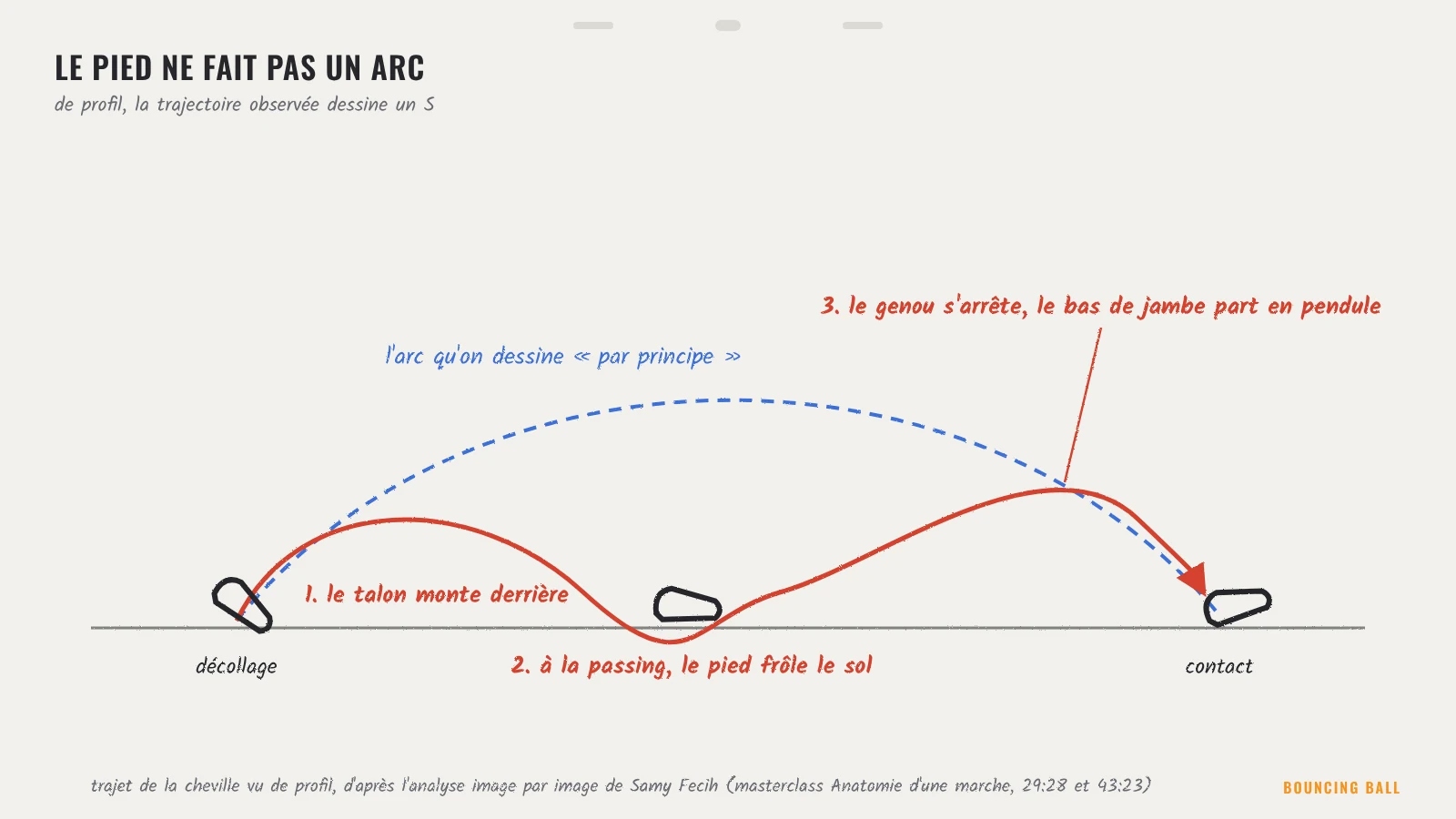
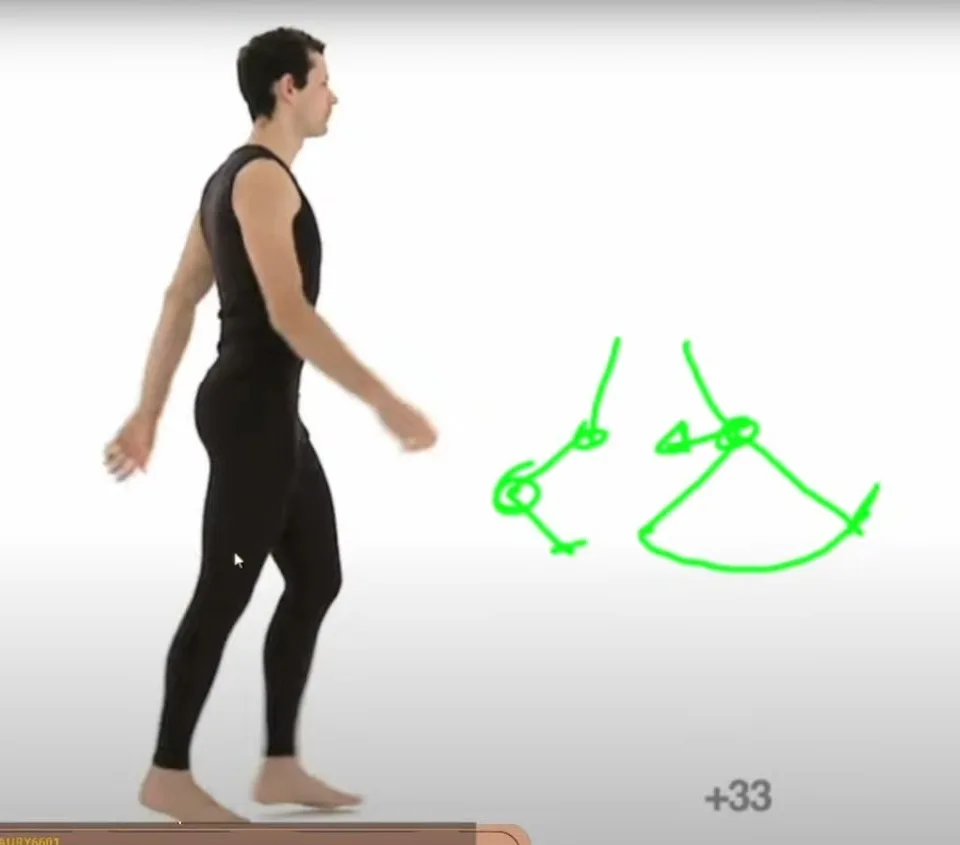
The rule to remember is not « Richard Williams is wrong », but this one: any animation rule stated as « this is how it is and nothing else » deserves to be checked (54:43). You can break anatomy for an art direction, as long as there is a logic behind it.
Animating a walk cycle in 3D: IK, FK and progression
These principles apply to 2D, 3D and stop motion. For 3D, Samy shares three production habits (44:12):
- Legs in FK as soon as they leave the ground, unless they only leave it for 3 or 4 frames. IK stays for the contact phases.
- Arms in FK, except when the wrist leads the action: then you switch to IK. An IK/FK snap tool saves a lot of time.
- Animate the walk in progression rather than in place (47:21). The character actually moves through the set, and step spacing is easier to control.
For a cartoon walk, same logic: start from an existing realistic walk, then exaggerate (51:01). The exaggeration holds because it rests on a true foundation.
Building your own reference library
Samy’s method is simple: watch people. In the street, in the subway, he spots unusual walks and builds his own reference library (13:06). He then annotates them frame by frame in a player such as KeyframeMP (15:25).
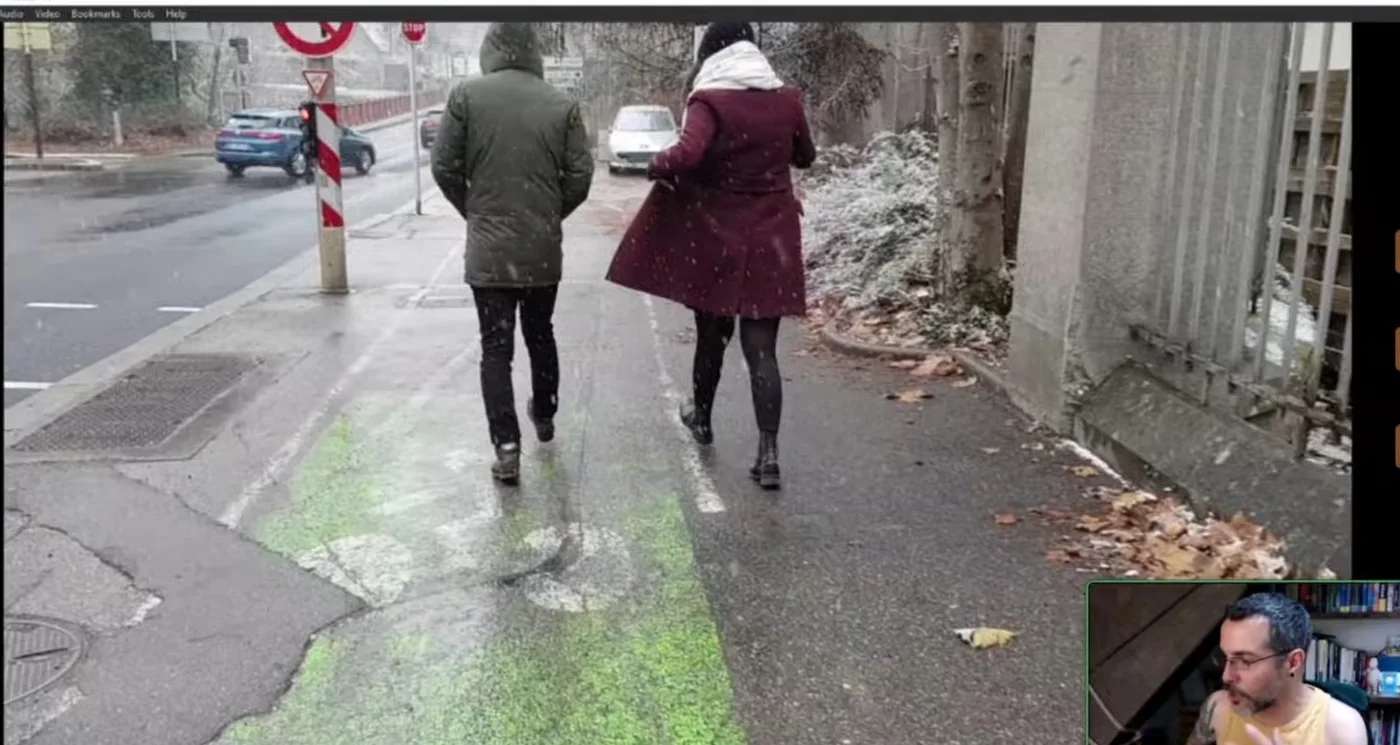
Plan for plenty of time: for Samy, one reference video means at least two hours of study for about ten seconds of animation (35:29). And preferably film strangers from behind: what you care about is the walk, not the face.
The checklist before animating a walk
Before opening Maya or TVPaint, ask yourself these questions, in this order (51:48 and 53:51):
- Anatomy
Perceived weight, joint flexibility, shoulder posture, foot support, proportions. - Lifestyle
Past and present activities: a former athlete, an office worker and a dancer do not walk the same way. - Personality
The message the character wants to send: rolling the shoulders to look strong, making themselves small to go unnoticed. - Mood
In a hurry, tired, relaxed. The more relaxed you are, the more the head sways and lags behind the body.
One last tip, borrowed from body language: a single clue is not enough. Several parts of the body need to tell the same story (55:58). And avoid clichés such as « stiff man, supple woman ».
Frequently asked questions
How do you make a walk cycle in animation?
Set the contacts first (the key pose of each step), then the passings (breakdowns), then the downs and ups (extremes). Before posing anything, define the character’s anatomy, lifestyle, personality and mood: they are what decide how each pose looks.
What are the 4 poses of a walk cycle?
Contact (the front foot touches the ground), down (the body absorbs the weight, pelvis at its lowest), passing (the free leg passes under the body) and up (the supporting leg rises onto the toes, pelvis at its highest). A full cycle has two steps, so two sets of these four poses.
What is the passing position?
It is the breakdown of the step: the moment the free leg crosses the supporting leg. It is the pose that defines a walk, because it shows whether the character is already on the toes (light) or still has a bent knee (heavy).
How do you show a character’s weight in a walk?
Work on the passing and on the amplitude of the up and down. A heavy character keeps the supporting leg bent longer and the pelvis drops further. Think about perceived weight: fatigue or mood make even a slim character heavier.
Should you animate a walk in IK or FK?
In production, the legs often switch to FK as soon as they leave the ground, except for 3 or 4 frames, and IK is kept for the contacts. The arms stay in FK except when the wrist leads the action.