Animation quota per day : what a junior animator really has to deliver in a studio
How many seconds of animation per day is a junior animator expected to deliver? And what happens if they can't keep up? Adrien Gromelle, a 2D animator and animation director on feature films and series, devoted an entire Bouncing Ball masterclass to quotas. He shares real production numbers, explains why juniors aren't expected to hit them at first, and walks through the habits that save days of work. Samy Fecih, a 3D animator and lead, adds what she expects from a junior animator before they show her a shot.
 By Bouncing Ball
- 13 min read
- Level: Students, interns, juniors
In this article
- Animation quotas and estimates in a studio: what are we talking about?
- How many seconds of animation per day for a junior animator?
- Why junior animators don’t hit their quotas in the first months (and why that’s planned for)
- Preparing your shot: briefing, animatic, neighboring shots and reference video
- How to split and plan your shot to hit the estimate
- When and how to go to your supervisor or lead
- Overtime and burnout: what’s normal and what isn’t
- In a nutshell
- Adrien and Samy’s habits, step by step
- FAQ
Animation quotas and estimates in a studio: what are we talking about?
In a studio, every shot comes with an estimate: the time planned to animate it. The animation quota is the same idea brought down to a single day. For Adrien, thinking about quotas means asking what can be done in the time available (00:50), and above all what should not be done. A character out of focus, blurred in the background, doesn’t deserve the time you give the one the shot is about (02:02).
Students tend to do the opposite: they want to animate everything and end up spending “a monstrous amount of time” on shots that didn’t need it (02:34).
It’s not up to the junior to decide what gets animated
The first thing to take on board when you start in a studio: “it’s not up to you to know what needs animating in the shot” (04:35). That was decided at the board stage with the director, then clarified by the animation supervisor, who is responsible for the estimates and has often written them. The classic junior mistake goes the other way: wanting to look flawless, not daring to bother the supervisor, and animating every character without a briefing (05:12).
Quotas aren’t a production whim either: without reliable numbers, nobody knows when cleanup can start (25:05). For Adrien, they serve the artists as much as the production, and trouble starts when people “sweep the dust under the rug” instead of cutting, simplifying, or adding time or people (1:07:41).
How many seconds of animation per day for a junior animator?
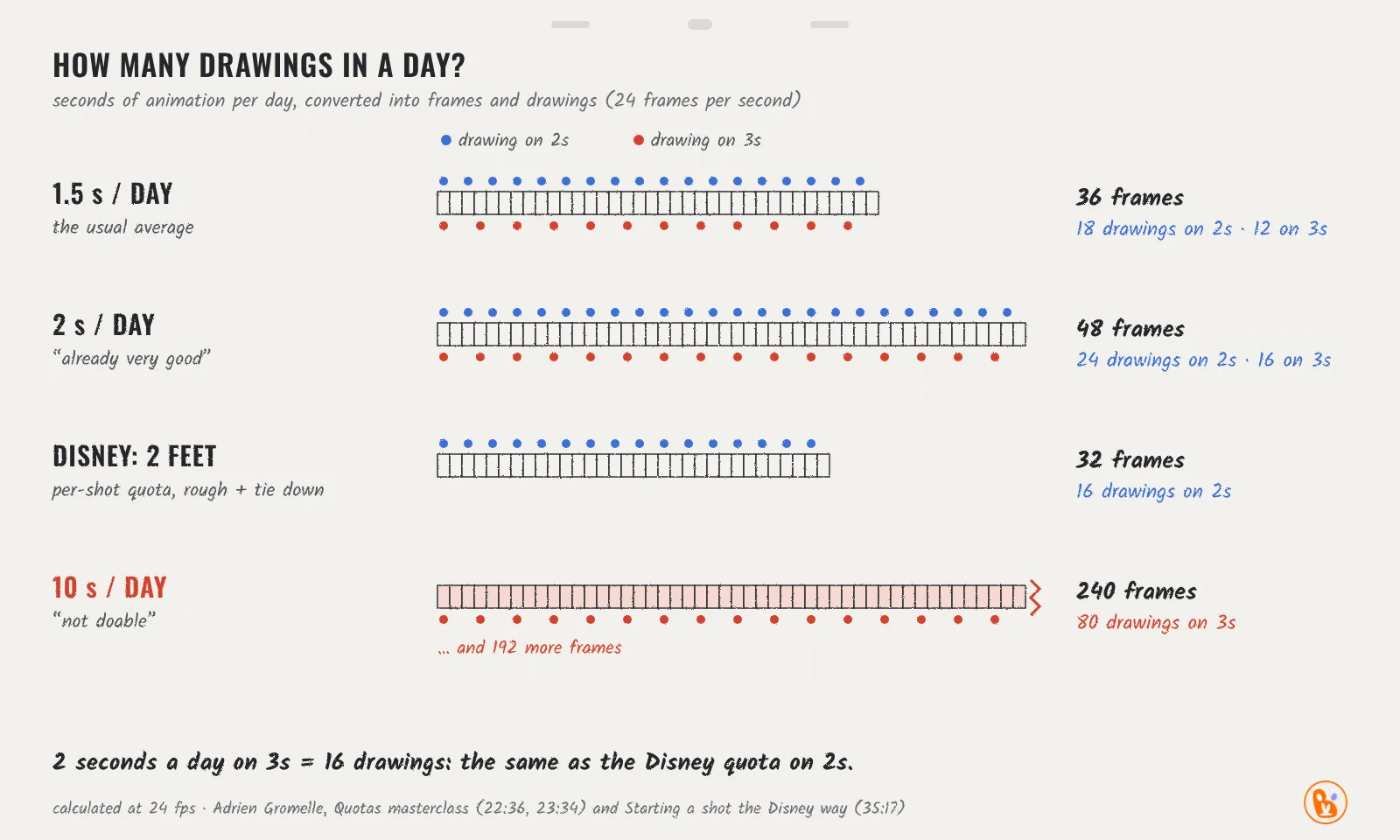
Adrien gives a range that depends heavily on the art style. On a semi-realistic or cartoony production, the average falls between 1 and 2.5 seconds per day, a “very wide range” (22:55). With a method that plans breakdowns, extremes and eases ahead of time, you can reach 2 seconds a day, “and 2 seconds is already very, very good.” The average is closer to 1.5 to 1.6 seconds on a production animated on twos and threes (23:34).
1.5 to 1.6 seconds of animation per day
The daily average Adrien Gromelle sees on a semi-realistic 2D production animated on twos and threes. Two seconds a day is already very good (23:34).
On the other hand, 10 seconds a day at the tie-down stage without layout posing “isn’t doable,” except for an ultra-simple style like La Linea, whose character is a single line (22:36). Yet it is the typical line on projects too ambitious for their schedule: “everything’s fine, you just need to animate three times faster” (57:31).
What about the Disney quota?
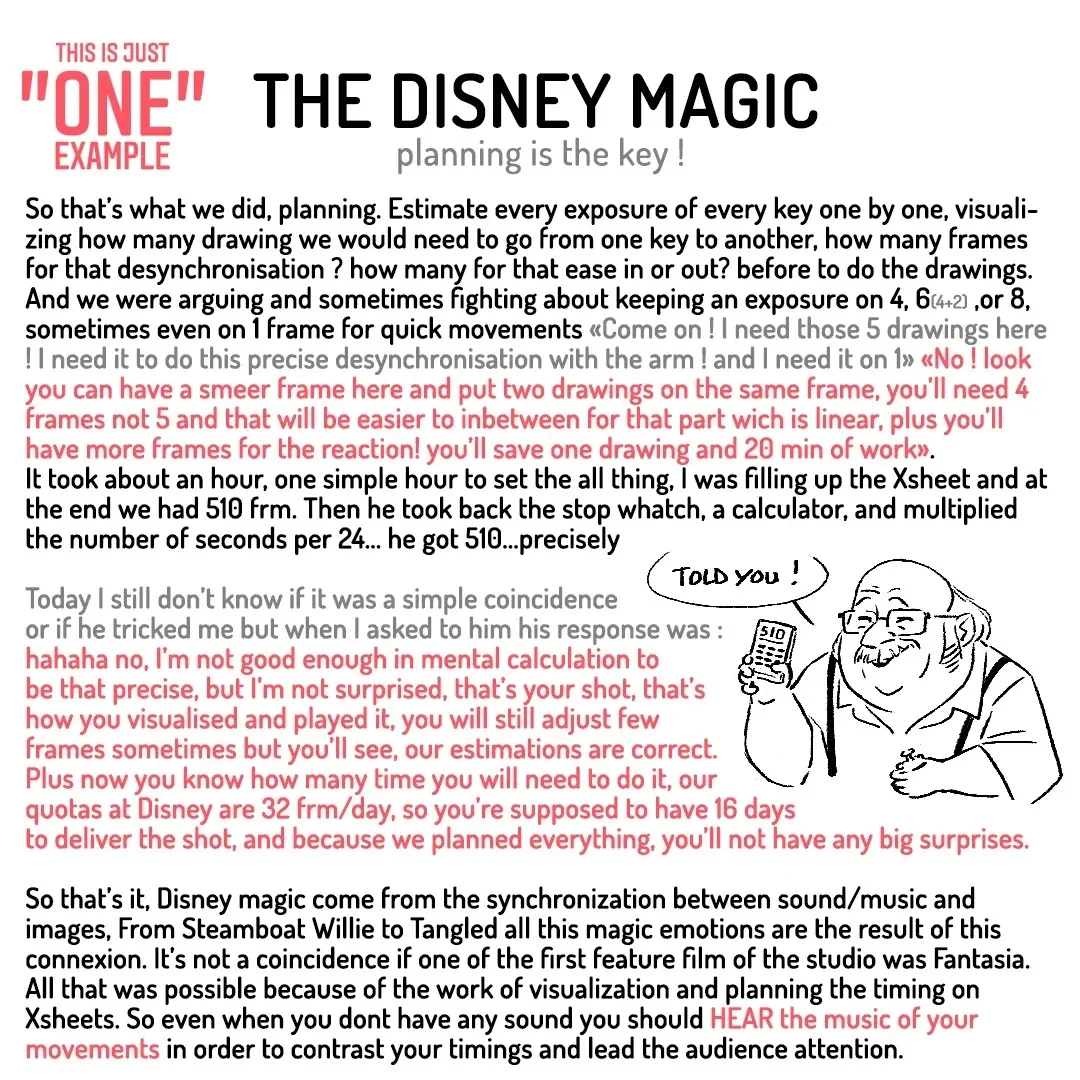
In the days of traditional 2D at Disney, the quota was 2 feet of film per day: 32 frames, or 16 drawings on twos, at the rough and tie-down stages (35:17). Adrien points out that this is the quota for a shot, not for a character (36:06). We broke this down in our article on animating on ones, twos and threes.
Converted into drawings, the numbers are closer than you’d think: 2 seconds animated entirely on threes is 16 drawings, the same as the Disney quota on twos. Since exposures get mixed within a shot, these conversions are only ballpark figures.
These numbers are for 2D. For a junior 3D animator, estimates are also set shot by shot, and shots of 10 or 12 seconds or more, which can take one to three months, go to seniors (01:16).
Why junior animators don’t hit their quotas in the first months (and why that’s planned for)
For a junior, an intern or an apprentice, missing quotas at the start of a production is normal: “it’s accepted, it’s factored into how the production is built” (13:12). The first week, the first few weeks, the first month, sometimes the first two months. Some people will never quite hit the quotas, and faster colleagues will make up for it (13:41). Juniors are also given easier shots (14:29).
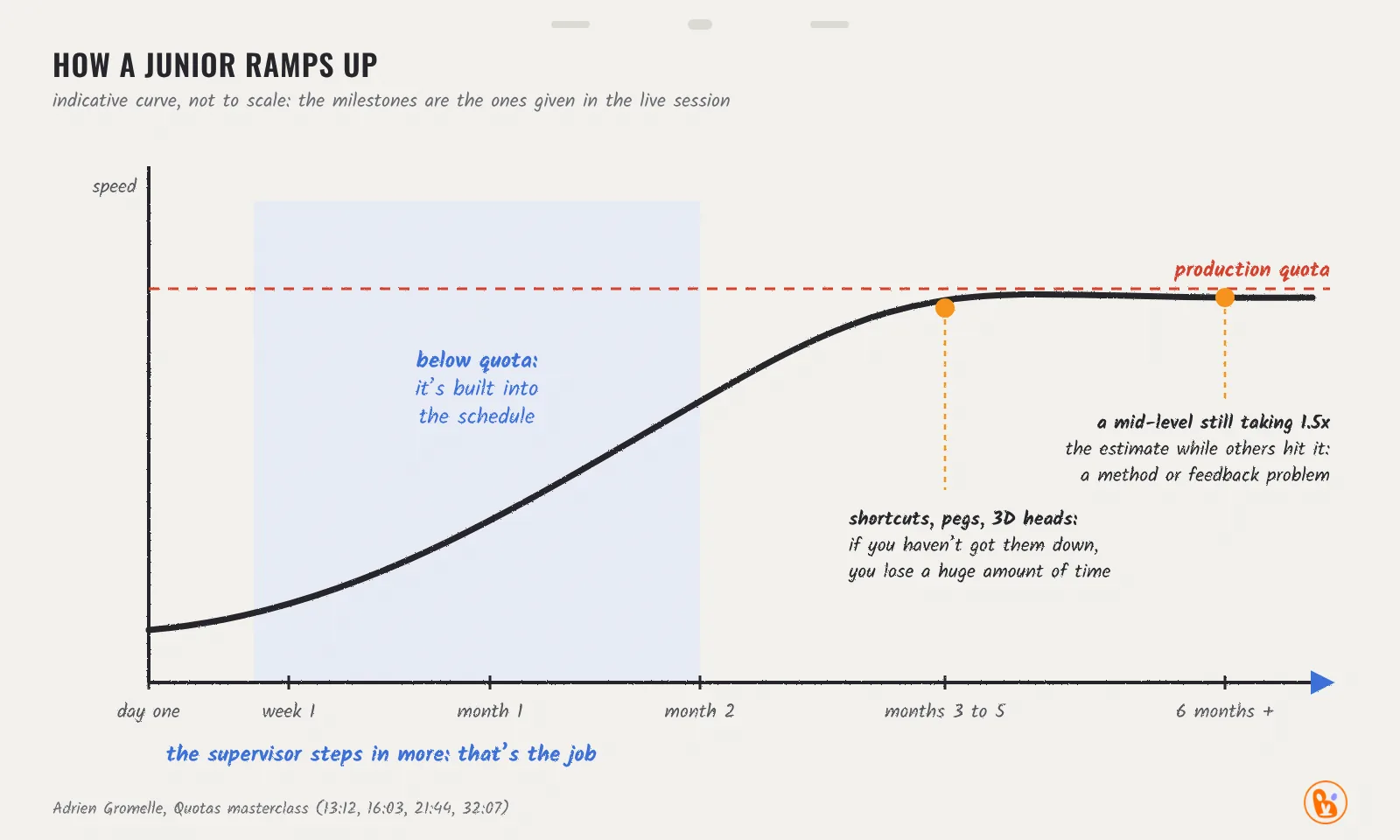
Adrien also gives the milestones that should raise a flag. After 3, 4 or 5 months, not having mastered keyboard shortcuts, pegs in Toon Boom or the 3D heads used to stay on model means losing “a monstrous amount of time for nothing” (31:21). And a mid-level animator who, six months into a production, still takes 1.5 times the estimate while everyone else hits their quotas has a method problem, or isn’t getting enough feedback from their supervisor (21:44).
What the supervisor owes the junior
Adrien insists: being a junior gives you the right to call on your supervisor much more than others (16:03). If a junior still misses their quotas after a month or two, it isn’t only their fault. The supervisor is there to make things work, and it’s up to them to come and explain, show and brief (16:34). That’s also why salaries differ (17:37). If the junior doesn’t make it, it’s “a failure for both of them” (29:53).
The length of the production matters too. On a short production, there’s no time to train anyone: it’s “sink or swim.” On a long one, the studio bets on the potential of a motivated junior, even if they aren’t up to speed in the first month (28:36).
Preparing your shot: briefing, animatic, neighboring shots and reference video
Before touching the shot, watch the animatic and the shots before and after, so you can anticipate continuity: every retake you could have avoided is wasted time (05:32). When you join a production, take a morning, or even a full day, to get familiar with the animation style and the characters (06:02).
Samy does the same in 3D. Before she starts, she looks at the shots before and after hers, and if they haven’t been animated yet, she goes to see the animators working on them to match energy and acting (04:46).
During the briefing, film your supervisor
During the briefing, you listen, take notes, ask questions, act things out in front of the supervisor or let them act it out (07:04). And you can ask to film them. First, you get a visual source instead of relying on memory. Adrien recommends importing it straight into your animation software, 2D or 3D, so you can flip between keys and spot weight shifts (08:06).
Second advantage: a reference approved by the supervisor already works like a first version you’re giving retakes on (09:06). And it commits them: if the intention changes later, it’s not the animator’s fault (09:25). Without a clear reference, the trap is to spend the whole quota searching in rough, or doing blocking pass after blocking pass in 3D, then having to finish everything in a rush (11:03).
How to split and plan your shot to hit the estimate
If the estimate looks unrealistic from the start, say so. Adrien gives the example of a shot to be done in two days, with a rough to get approved and a second character: he would go and tell his supervisor that two days seems optimistic (12:18). There are two possible answers. Either the supervisor simplifies: “just do two poses on that, put in a chart, and we send it to the assistants.” Or they split the work into steps, each with its own deadline, so you quickly see whether you’re falling behind (12:44).
Adrien splits his shots this way anyway. He breaks the shot into small tasks (rough, tie down, clean) with small estimates, which reassures him and helps him focus (18:33). He relies on the Disney method: set your keys, estimate the number of frames between each one, plan exposures and charts in advance (19:53). You then know which milestone must be done by Monday, which one by Tuesday, and how many drawings a day you need at tie down (20:36).
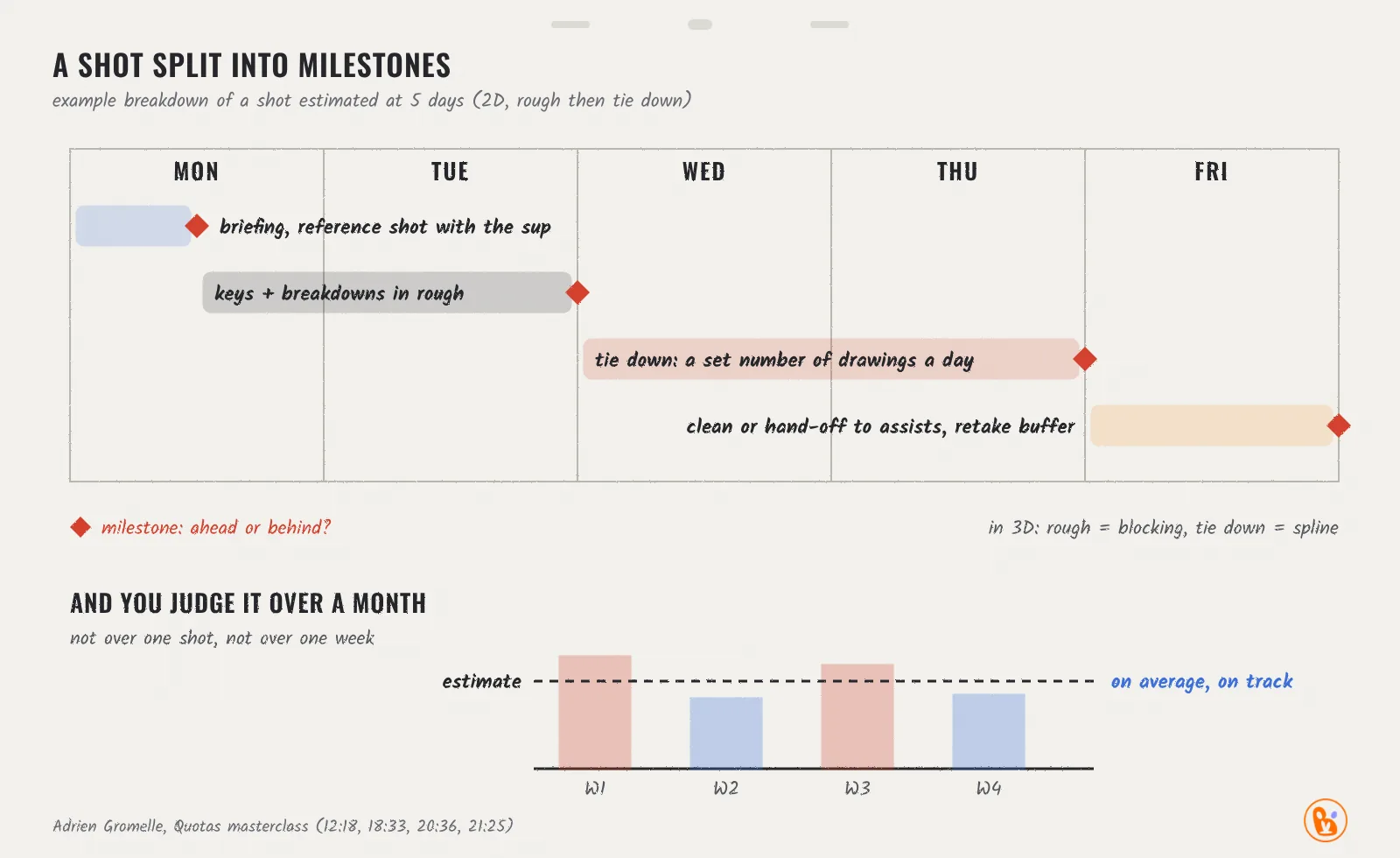
At Disney, the number of frames in the shot and the quota told you which day the shot would be done, and a delay showed up early enough to react: go from 16 to 17 or 18 drawings a day, or leave some inbetweens to cleanup (36:55). Adrien reckons planning “easily” saves him a third of the time, and in his view the animators who ask their questions to the supervisor upfront are often the fastest in the end (49:49). Estimating is learned by getting it wrong: you planned 32 frames, it was too fast, so next time you plan 40 (44:46).
And to know whether you’re keeping up, look neither at one shot nor at one week, but at a month: sometimes you go over, sometimes you go faster, sometimes a retake eats up time (21:25).

Fewer drawings isn’t always faster
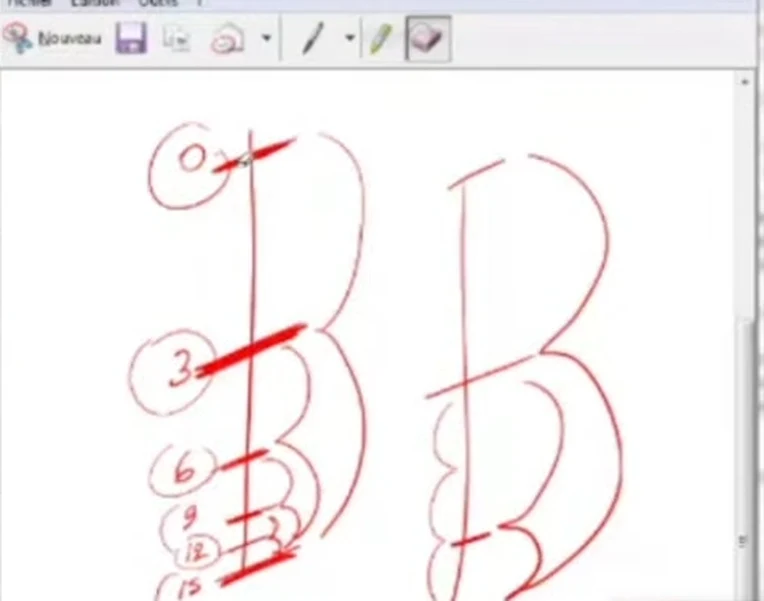
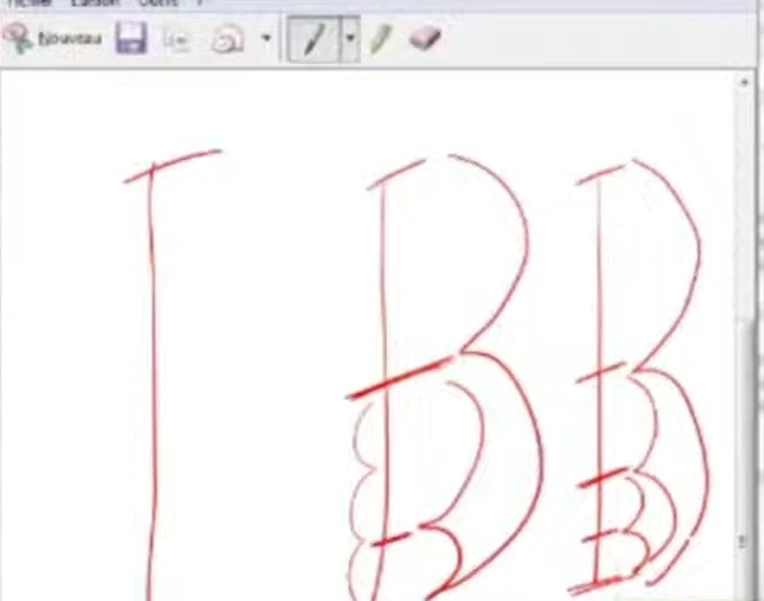
To work fast, Adrien chains halfway inbetweens: keys drawn in full, body inbetweens as partials or silhouettes, and on the last drawings only what’s offset, such as arms, hair and clothes (53:00). A one-third inbetween takes a long time to draw, while a halfway inbetween usually works just as well (55:02). And one extra drawing, on twos rather than threes, often saves time on overlapping action: “do an extra drawing if you need to” (57:53).
When and how to go to your supervisor or lead
“Don’t stay stuck. When you have a problem, ask for help.”
Adrien Gromelle, Quotas masterclass 32:32
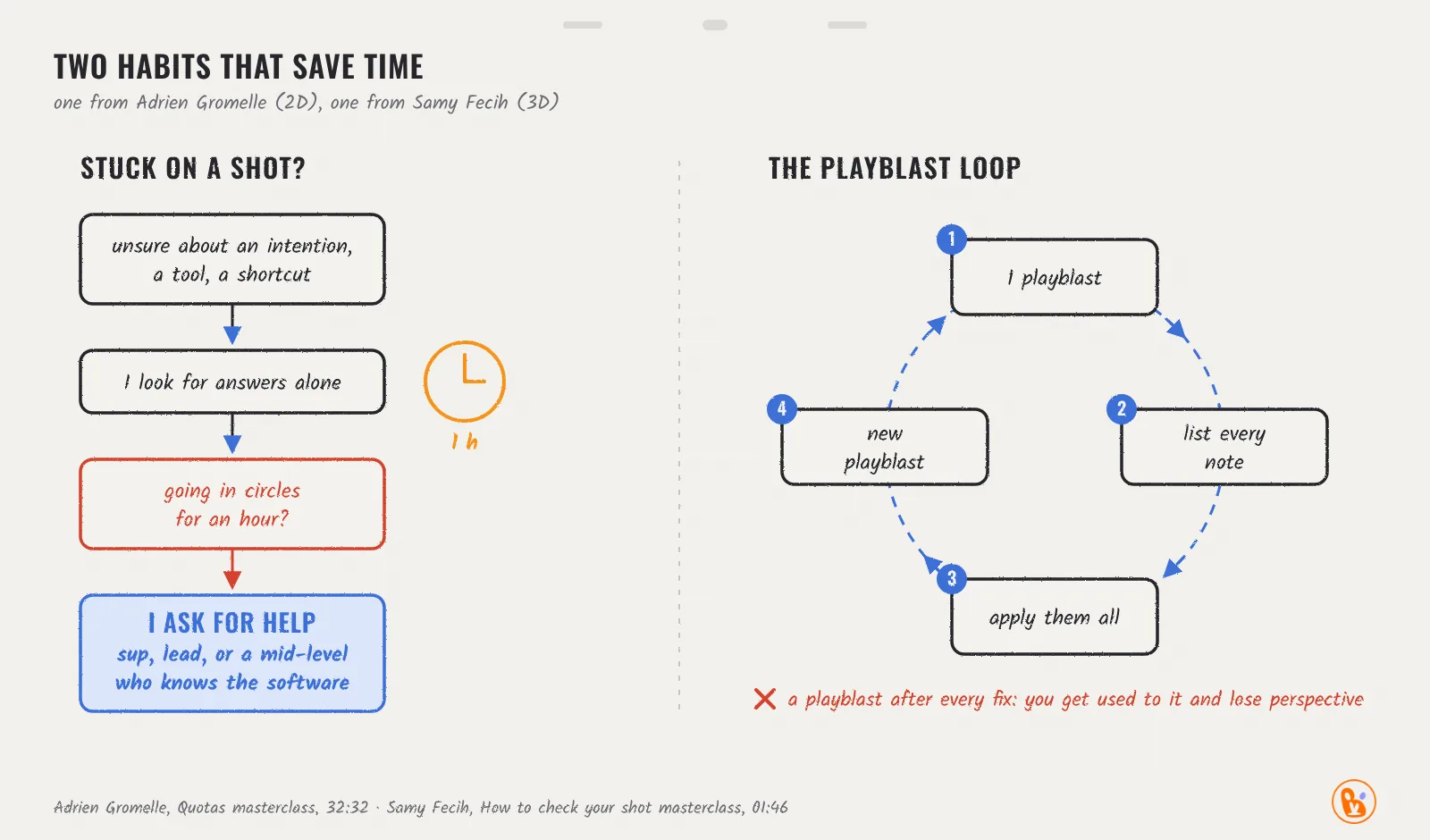
Adrien’s rule is simple: a doubt about an intention, a tool you haven’t mastered, and above all an hour spent going in circles on a shot means you ask for help (32:46). For a software issue, a mid-level animator who knows the tool well can help (32:24). If we work as a team, “that’s precisely why” (33:44).
Same logic when the estimate is impossible. Don’t try to cheat and hope it won’t show: if it’s bad, it shows (27:41). Instead, agree with your supervisor on the bare minimum: the drawings that tell the story, a reference, even a short one (26:34).
In 3D: what a lead expects before you come to her
Samy adds a counterpoint: asking for help, yes; handing everything over to the lead, no.
“A lead isn’t a cop. We’re not there to police you, we’re there to help you.”
Samy Fecih, How to check your shot masterclass 06:07
She expects animators to be autonomous and do their own checks. With 7 to 9 animators to manage, a lead can miss a continuity issue, and relying on her to catch everything is, in her words, “a little red flag” (06:48). Her method: show your blocking to at least two colleagues before the lead (05:11), check that the energy matches the neighboring shots, and reread the notes you got on previous shots (07:07). When she gets the same note on two different shots, it’s something to work on, often a gap with the style of the film (07:51).
For playblasts, she follows a simple rule: make one, list every note, apply them all, and only then make another one. Making a new playblast after every fix means getting used to what you see and losing all perspective (01:46).
Overtime and burnout: what’s normal and what isn’t
When quotas are impossible and nobody hits them, it’s not your fault (25:51). Absurd quotas even backfire: “not only do they fail to hit the quota, they do less than they would have done with the right estimate” (24:38).
“Nobody hits the quotas, but I’m going to hit them: if you want to burn out, that’s the best way to get there.”
Adrien Gromelle 29:02
At the end of a production, overtime often comes from the unexpected: client notes, a sequence cut and then re-boarded. Animators are at the very end of the chain, but it isn’t their fault (34:36). Adrien avoids pushing his team into overtime: he would rather simplify the animation, cut, or use holds, especially since unpaid overtime is probably not legal in France (35:25). And on a production running late, the best fix isn’t adding people, who need training, but adding days (1:03:49).
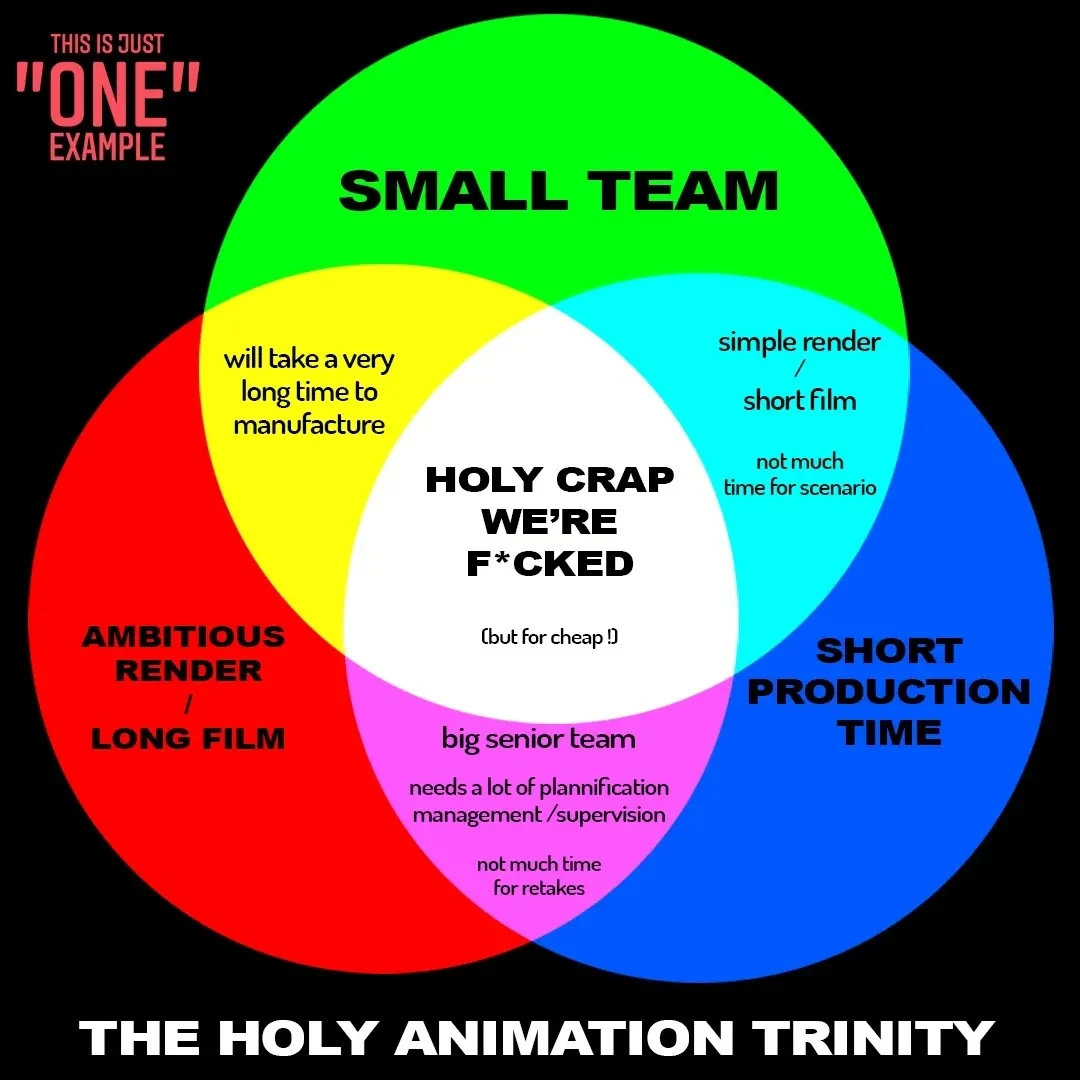
A junior’s overtime hurts the other juniors
A junior’s learning time is already built into the estimates (35:54). A junior who regularly works overtime to hit impossible quotas hurts the other juniors: production concludes that if he can do it, the others should too, when in fact he’s working 9 hours a day (36:28). Making up an hour now and then because you dawdled is understandable. But not as a habit: “you shouldn’t be doing overtime to hit your quotas” (37:54).
On productions too ambitious for their schedule, Adrien warns that burnout is “almost certain” and that juniors pay the price first, because they haven’t been trained to work fast (58:49). We came back to the question of junior jobs in our article Will AI replace animators?
In a nutshell
- Ballpark figure: 1.5 to 1.6 seconds per day on average on a semi-realistic 2D production on twos and threes. Two seconds is already very good. The Disney quota was 16 drawings on twos.
- Missing quotas at first is planned for: the first week, the first month, sometimes two months.
- Prepare: animatic, neighboring shots, a reference filmed with your supervisor during the briefing.
- Split your shot into milestones and judge your quotas over a month, not over one shot.
- Stuck for an hour? Ask for help, but do your own checks before going to the lead.
- Overtime isn’t a method: it wears you out and skews expectations for the other juniors.
Adrien and Samy’s habits, step by step
To hit your estimates from your very first studio shots:
- Get briefed
What needs animating, and what doesn’t. - Look around the shot
Animatic, shots before and after, the animators next to you. - Film the reference
With your supervisor acting it out, then import it into your software. - Split it into milestones
Rough or blocking, tie down or spline, clean: a deadline for each step. - Speak up early
If the estimate looks impossible, or if you’ve been going in circles for an hour. - Check before the lead does
Two colleagues’ opinions, continuity, past notes, one playblast per round of notes.
And judge yourself over a month: one shot running over says nothing about your level.
The screenshots in this article are taken from Adrien Gromelle’s Quotas masterclass, streamed live for Bouncing Ball. The slides come from his Instagram account @adriengromelle.
FAQ
How many seconds of animation per day for a junior animator?
It depends on the style and the exposure. On a semi-realistic or cartoony 2D production animated on twos and threes, Adrien Gromelle sees an average of 1.5 to 1.6 seconds per day, within a range of 1 to 2.5 seconds. Two seconds a day is already very good. A junior isn’t expected to reach that pace on arrival: the first weeks, or even the first two months, are built into the schedule.
Are quotas the same for a junior 3D animator?
The figures quoted here come from 2D. In 3D too, estimates are set shot by shot, long shots go to seniors, and missing quotas at first is planned for. The habits are the same: neighboring shots, filmed reference, colleagues’ feedback and one playblast per round of notes.
What should you do if a shot’s estimate looks impossible?
Tell your supervisor right away. They can simplify the shot (fewer poses, a chart left to the assistants) or split it into milestones so you quickly see if you’re behind.
What was an animator’s quota at Disney?
In traditional 2D, 2 feet of film per day per shot: 32 frames, or 16 drawings on twos, at the rough and tie-down stages.
Should you work overtime to hit your animation quota?
No. A junior’s learning time is already in the estimates. Regular overtime wears you out, skews production’s expectations of the other juniors, and doesn’t fix a badly estimated quota.
Everything you have just read, our mentors put into practice every day on feature films. To go further, they guide you in small groups through our professional training programs, shot by shot, with the standards of a real production.